Blog

Why Choose an Argon Dewar Tank for Global Sourcing?

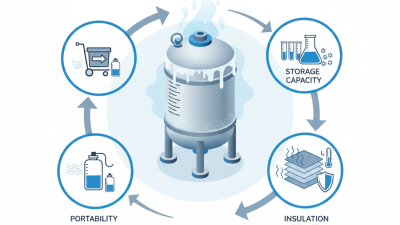
Global sourcing of industrial gases requires more than comparing purchase prices. It demands confidence in storage, transport, inspection, and repeated daily use. An argon dewar tank can support that confidence when its vacuum insulation, pressure controls, and material quality match the application.

Cryogenic systems deserve careful attention. Very cold.

John E. Fesmire, a NASA cryogenics specialist, has said, “Cryogenics is a systems engineering discipline.” This principle matters when selecting an argon dewar tank for international procurement. The tank is not an isolated container. Its performance depends on valve design, neck construction, relief protection, filling practice, and operator training.

A reliable sourcing decision should examine measurable details. Check the working pressure, usable capacity, evaporation rate, and connection standards. Confirm that documentation follows the destination market’s requirements. Inspect weld quality and vacuum performance, not only the polished exterior. A tank may look impressive and still lose argon too quickly.

Supplier experience also matters. Ask for test records, maintenance guidance, spare-part availability, and clear shipment protection. A strong supplier explains limitations instead of promising perfect performance. That honesty is valuable.

The process is not flawless.

Delivery schedules can change. Local service networks may be limited. Even a well-designed argon dewar tank requires correct handling after arrival. Buyers should allow room for verification, staff training, and unexpected operating conditions.

For manufacturers, laboratories, and metal-processing facilities, global sourcing becomes more practical when equipment decisions are evidence-based. The right tank can reduce gas loss, simplify handling, and support stable production. It should be selected for the complete operating environment, not for price alone.
Why Choose an Argon Dewar Tank for Global Sourcing?

Define Argon Dewars: −185.8°C Boiling Point and 1.40 kg/L Liquid Density

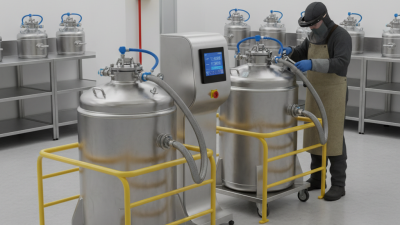
Argon Dewars suit global sourcing because they preserve a cryogenic liquid with predictable physical behavior. The NIST Chemistry WebBook reports argon’s normal boiling point at 87.30 K, or about −185.8°C. Its liquid density is approximately 1.40 kg/L near that temperature. This figure supports practical payload planning. However, density changes with pressure and temperature. Treating 1.40 kg/L as a fixed value would be a costly mistake.

A vacuum-insulated Dewar reduces heat transfer during storage and local delivery. Its performance depends on vacuum quality, neck design, closure condition, and handling discipline. ISO 21010:2017 emphasizes compatibility and safety considerations for cryogenic vessels. Procurement teams should request test records, working pressure, tare weight, hold time, and valve specifications. These details make supplier comparisons more reliable across borders. In field use, a properly selected vessel feels stable, not excessively frosted, during routine inspection. Still, real-world hold times can disappoint when doors open frequently or ambient temperatures rise.

Tips: Calculate usable liquid volume from the certified fill limit, not the external size. Ask for density conditions and calibration documents. Keep ventilation requirements visible at receiving points. A simple receiving checklist prevents many avoidable errors.

Match Capacity to Demand: Compare 10–240 L Dewars and Holding-Time Data

Why Choose an Argon Dewar Tank for Global Sourcing?

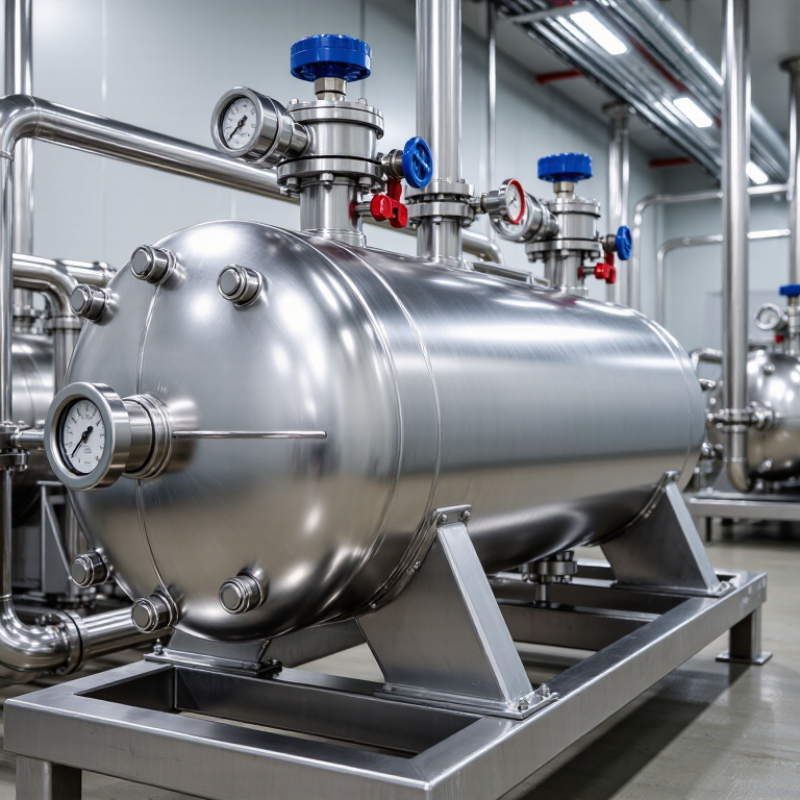
Choosing the right argon dewar starts with actual demand, not the largest available size. A 10 L dewar suits laboratories with light, intermittent consumption. It is easier to lift, store, and move through narrow service areas. A 40 L or 60 L model may fit workshops with regular daily use. Larger 100–240 L dewars can reduce refill frequency for industrial operations. More capacity is not always better.

Holding-time data deserves careful attention. Ask suppliers to provide test conditions, evaporation rates, and usable storage periods. Values should identify ambient temperature, pressure, and whether the dewar was opened repeatedly. A 120 L unit may hold argon longer than a 20 L unit, but operating patterns can change the result. Frequent access increases heat input. Warm loading areas can shorten practical holding time.

During equipment checks, inspect valve protection, caster quality, insulation condition, and readable pressure indicators. These details affect handling after international transport. Match the dewar to weekly consumption, refill access, and available floor space. A capacity chart may look precise while hiding field variation. I still question any holding-time claim without test conditions. Small units can also create more delivery work than expected. Reliable sourcing depends on comparing measured data with the facility’s real routine.

Verify Vessel Quality: Apply ISO 21009-1 and EN 1251 Compliance Criteria

Why Choose an Argon Dewar Tank for Global Sourcing?

An argon Dewar tank supports safe storage and controlled delivery of cryogenic argon. However, vessel quality should guide every sourcing decision. ISO 21009-1 provides criteria for static vacuum-insulated vessels, including design, manufacturing, inspection, and testing. EN 1251 adds requirements for transportable vacuum-insulated vessels, where applicable. Confirm the correct edition and scope before comparing suppliers. Standards can be misunderstood.

Review the vessel nameplate, design pressure, working volume, test date, and material specifications. Check whether the inner vessel, outer jacket, piping, valves, and relief devices match the approved technical documents. A stable vacuum is essential.

Ask for vacuum performance records, pressure-test evidence, inspection reports, and traceable serial numbers. Documentation should identify the manufacturer, inspector, testing method, and acceptance criteria. Do not accept a generic compliance statement. It may sound professional but prove little. Local transport and pressure-equipment rules may also require additional checks, especially across borders. A qualified third-party inspector can verify weld quality, insulation condition, valve operation, and marking accuracy before shipment. No checklist is perfect; field conditions still deserve attention.

Tips: Compare documents with the actual tank. Photograph labels, connections, and damage before loading. Confirm relief-device settings with a competent engineer. Request maintenance guidance in clear English. If EN 1251 does not apply to the intended use, document the reason and identify the applicable requirement instead.

Plan Global Transport: Follow UN 1006, Class 2.2, ADR, IMDG, and IATA Rules

Why Choose an Argon Dewar Tank for Global Sourcing?

Global sourcing needs more than a strong vessel. It needs transport accuracy. Argon classified as UN 1006 is compressed gas, Class 2.2, under the UN Model Regulations. A cryogenic liquid argon Dewar may instead require UN 1951. This distinction is easy to miss. It changes labels, documents, and carrier acceptance. ADR applies to European road transport. The IMDG Code governs sea shipments. IATA Dangerous Goods Regulations control air transport. Each mode requires suitable packaging instructions, marks, and emergency information.

Industry data supports careful planning. The World Bank’s 2023 Logistics Performance Index covered 139 economies and assessed reliability, tracking, and timeliness. These factors directly affect gas deliveries. IATA reports that air cargo carries about 35% of global trade value, despite representing less than 1% of trade volume. That value increases the cost of one documentation error. In practical sourcing work, a tank may pass a visual inspection yet fail a carrier’s valve, pressure, or certification review. That uncomfortable gap needs attention.

Tips: Confirm whether the cargo is compressed or refrigerated liquid argon before assigning UN 1006. Request current pressure-test records and valve protection details. Prepare the Safety Data Sheet, dangerous goods declaration, packing certificate, and transport labels before booking. Check ADR, IMDG, and IATA requirements separately. Do not reuse one shipping document for every mode. A small wording error can delay a pallet for days.

Why Choose an Argon Dewar Tank for Global Sourcing?

Plan global transport according to UN 1006, Class 2.2, ADR, IMDG, and IATA requirements.

UN 1006 identifies argon, compressed, while Class 2.2 identifies a non-flammable, non-toxic gas. The chart shows the applicable transport framework for each major mode: ADR for road transport, IMDG for sea transport, and IATA Dangerous Goods Regulations for air transport. Requirements may vary by route, country, carrier, packaging configuration, and shipment quantity.

Evaluate Suppliers: Compare 99.999% Purity, Traceability, Lead Time, and Cost

Why Choose an Argon Dewar Tank for Global Sourcing?

When sourcing an argon dewar tank, purity should be verified, not simply advertised. A 99.999% specification matters only when supported by recent laboratory test results. Ask for the batch number, analysis date, and testing method. Compare these details across suppliers. Small gaps can affect welding quality, laboratory readings, and production stability. Request clear photographs of the tank, valve, insulation, and identification plate. Details matter.

Traceability reveals how seriously a supplier manages quality. Each tank should connect to inspection records, pressure tests, material data, and service history. Check whether documents match the physical serial number. I have seen paperwork look complete while one number was missing. That weakness is easy to overlook. It should not be.

Lead time and cost require practical comparison. Ask for production time, stock location, export documentation, transit estimates, and replacement procedures. A cheaper quote may exclude freight, inspection, taxes, or protective packaging. Compare the complete delivered cost instead. Also confirm compatibility with local safety requirements and storage practices. Delays can be expensive. Yet, the fastest offer is not always the safest choice. A reliable supplier explains limitations clearly and updates buyers when conditions change.